
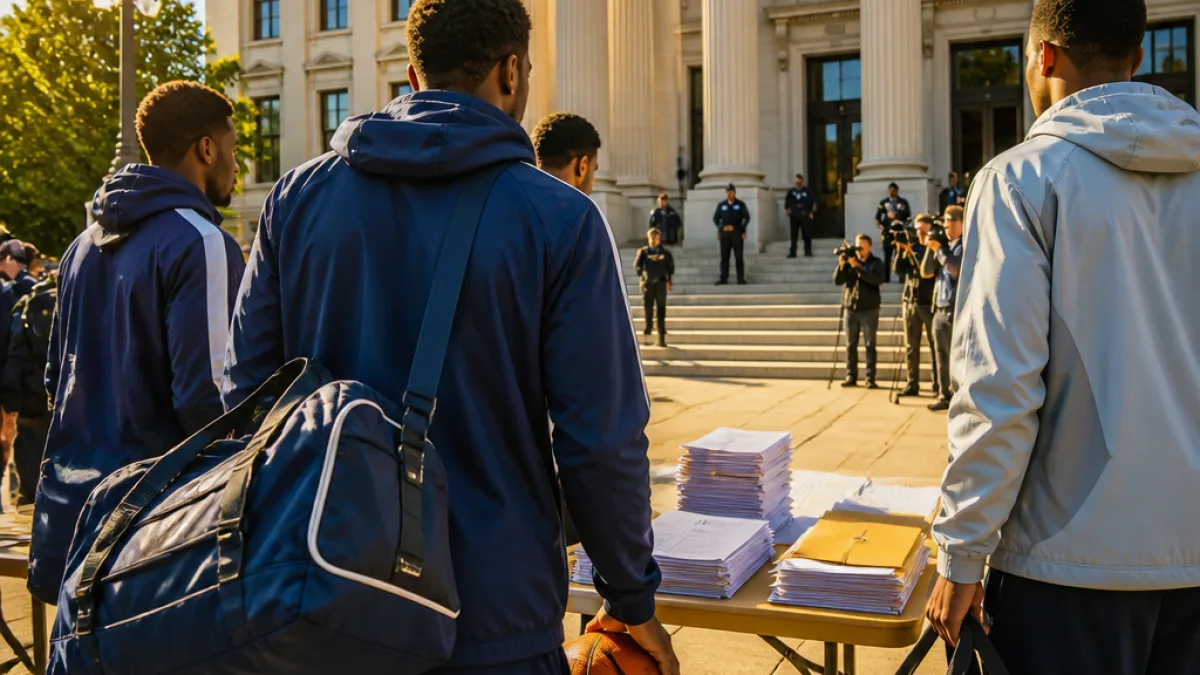
LOUISVILLE — A group of current and former Division I athletes, among them Missouri forward Mark Mitchell and several players with Kentucky ties, filed suit in Jefferson County this week seeking an extra year of collegiate eligibility and permission to enter the NCAA transfer portal ahead of the 2026-27 season.
Who is involved and what they are asking for
The plaintiffs named in the complaint include athletes from a mix of programs across the region. They have asked the court for a range of emergency and permanent relief intended to allow them to compete next season and to communicate with prospective new programs.
“Petition for an order prohibiting defendant from enforcing a bylaw that is preventing plaintiffs from participating in NCAA Division I athletics for the 2026-2027 season due to them already having competed in four seasons already,”
The suit requests a temporary restraining order, a temporary injunction and a permanent injunction preventing enforcement of what the plaintiffs describe as a bylaw that limits them to four seasons of competition. Plaintiffs also seek court permission to be placed in the NCAA transfer portal immediately, which would allow them to speak with coaches from other schools.
List of plaintiffs and affiliations
The filing names a group that includes both basketball and football players, several with Kentucky connections. The athletes identified in initial reports are:
- Mark Mitchell — Missouri, men’s basketball
- Levavium (LJ) Wells II — Northern Kentucky (basketball)
- Donovan Oday — McNeese State (basketball)
- D’Angelo Hutchinson — Louisville (football)
- Kayden Campbell — Louisville (baseball)
- Justin Allen — Wisconsin-Green Bay (basketball)
- Fred King — Murray State (basketball)
- Colin Porter — Liberty (basketball)
- Albert Vargas Frito — Robert Morris (basketball)
- Jabari Mack — Louisville (football)
| Athlete | School | Sport |
|---|---|---|
| Mark Mitchell | Missouri | Men’s basketball |
| Levavium (LJ) Wells II | Northern Kentucky | Basketball |
| D’Angelo Hutchinson | Louisville | Football |
Local implications
For Kentucky college sports fans, the lawsuit carries immediate significance. Louisville players are among the plaintiffs, and a decision could reshape the roster landscape for several in-state programs, including the Wildcats and Cardinals, depending on outcomes and individual choices.
If the court grants the injunctions sought, the named athletes could be cleared to compete in 2026-27 and to pursue new destinations via the transfer portal before the NCAA’s standard deadlines. That would allow programs across the state and region to recruit experienced players on short notice.
What's next in court
A hearing is scheduled for 10:30 a.m. ET Thursday in Louisville. The lawsuit asks Judge Brian Edwards to act quickly, including opening the transfer portal for the plaintiffs through Tuesday, Aug. 18, according to court filings cited in early reports. Edwards, who graduated from the University of Kentucky College of Law in 1996, will hear arguments on the emergency relief.
The case is both a legal challenge to NCAA rules and a test of how federal courts will treat eligibility questions tied to longstanding association bylaws. Its outcome could affect not only the players named in this suit but also others who believe they have similar grounds for relief.
Background on eligibility disputes
Eligibility lawsuits have become more common as student-athletes, their advocates and lawyers push back on NCAA determinations and seek clarity on how years of competition and medical or pandemic-related exceptions are counted. Courts have occasionally ordered temporary relief allowing athletes to compete while disputes continue, though outcomes have varied by case.
For now, the affected athletes, their families and the teams involved are awaiting the hearing in Louisville. Should the court grant any of the emergency relief the plaintiffs seek, it could prompt rapid roster decisions and conversations among coaches and players across the region.
Reporting will continue from the courthouse as the case develops.

















