
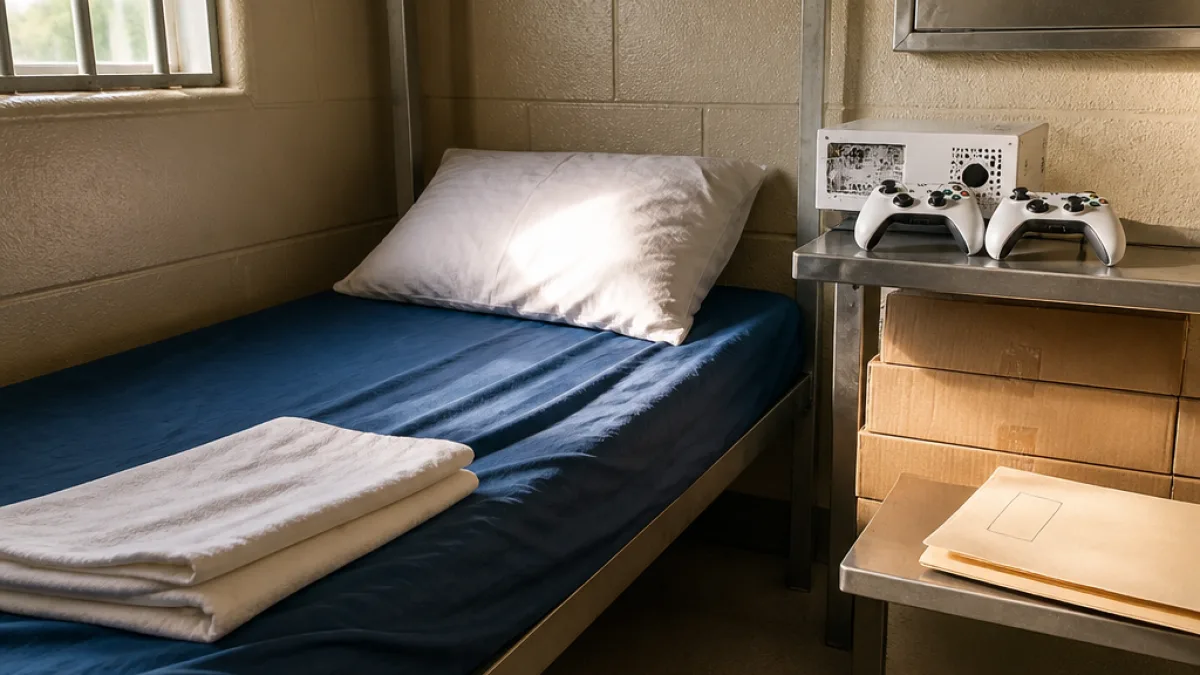
A Delaware inmate who sued the state Department of Correction for more than $100,000 over alleged inadequate medical care accepted an unusual settlement — a modified Xbox, two controllers and a bottom bunk — officials say.
Case background and claims
The lawsuit was filed by Devin Coleman, who is incarcerated at the James T. Vaughn Correctional Center in Smyrna. Coleman is serving a 29-year sentence for possession of a weapon by a person prohibited and a probation violation, after being designated a habitual offender in 2021.
Coleman alleged he had previously fractured his left eye socket and could not fully close that eye. He said the injury left him with light sensitivity, headaches and eye pain. According to his complaint, he repeatedly asked prison medical staff or contractors for medical sunglasses and medication for pain relief. Coleman also sought a bottom bunk and reduced lighting in his cell. He said those requests were denied.
In the lawsuit, Coleman asserted violations of the Eighth Amendment — which prohibits cruel and unusual punishment — and the Americans with Disabilities Act, arguing that the facility failed to provide required medical care and reasonable accommodations.
Settlement terms and department response
The case settled last year. The Department of Correction denied liability as part of the agreement and is barred from commenting about the settlement. The recorded terms included the delivery of a modified Xbox gaming console, two controllers and assignment to a bottom bunk.
"Incarcerated individuals in state prison facilities have the ability to purchase modified Xbox devices through commissary with their own funds for recreational purposes," Department of Correction spokesman Jason Miller told Delaware Online. "Internet and Wi-Fi access is disabled on these modified devices, and the devices come pre-loaded with games selected by the purchaser."
Questions about recreational devices and security
Coleman told Delaware Online that about 40 inmates at the Vaughn facility had modified Xbox units. Department officials described how the systems are controlled to limit security risks — specifically noting disabled internet and Wi‑Fi access and games preloaded by the purchaser.
Despite receiving the console under the settlement, Coleman said the device was confiscated in July after officials determined content on it was inappropriate. The department has not publicly provided details about the confiscation.
Why this matters locally
The settlement highlights several ongoing tensions for Delaware correctional policy and for the public that pays for the system:
- How prisons balance medical care and disability accommodations with security and resource constraints.
- The role of private contractors in delivering health services inside correctional facilities.
- How recreational items such as modified gaming consoles are regulated and whether they are considered appropriate compensation in legal disputes.
Practical considerations and next steps
Because the Department of Correction denied liability, the settlement does not constitute a judicial finding on whether Coleman’s medical or disability claims were valid. The record of the settlement leaves questions for advocates, lawmakers and the public about how similar disputes will be resolved in the future and what standards are applied when inmates request accommodations.
Advocates for incarcerated people often point to medical neglect and delays in treatment as recurring problems in jails and prisons nationally. At the same time, corrections officials emphasize security, limited budgets and the need to avoid creating incentives that could be misused.
| Item | Included in settlement |
|---|---|
| Monetary payment | No public record of cash payment |
| Recreational device | Modified Xbox (no internet/Wi‑Fi) |
| Accessories | Two controllers |
| Housing accommodation | Bottom bunk |
Public records and agency statements show the department’s approach to gaming systems is to permit purchases through commissary, with technical restrictions to reduce security risks.
Reporting on corrections and oversight
Cases like Coleman’s prompt scrutiny from civil rights organizations and lawmakers who oversee corrections. For readers seeking more information, public records requests to the Department of Correction or filings in the superior court where the suit was lodged are the primary way to examine the full administrative or legal record, including any medical documentation submitted by the inmate.
The settlement draws attention to how Delaware’s correctional system addresses medical and disability-related requests and how those decisions are resolved when disputes escalate to litigation.
— Simone Alvarez, State Correspondent
















