
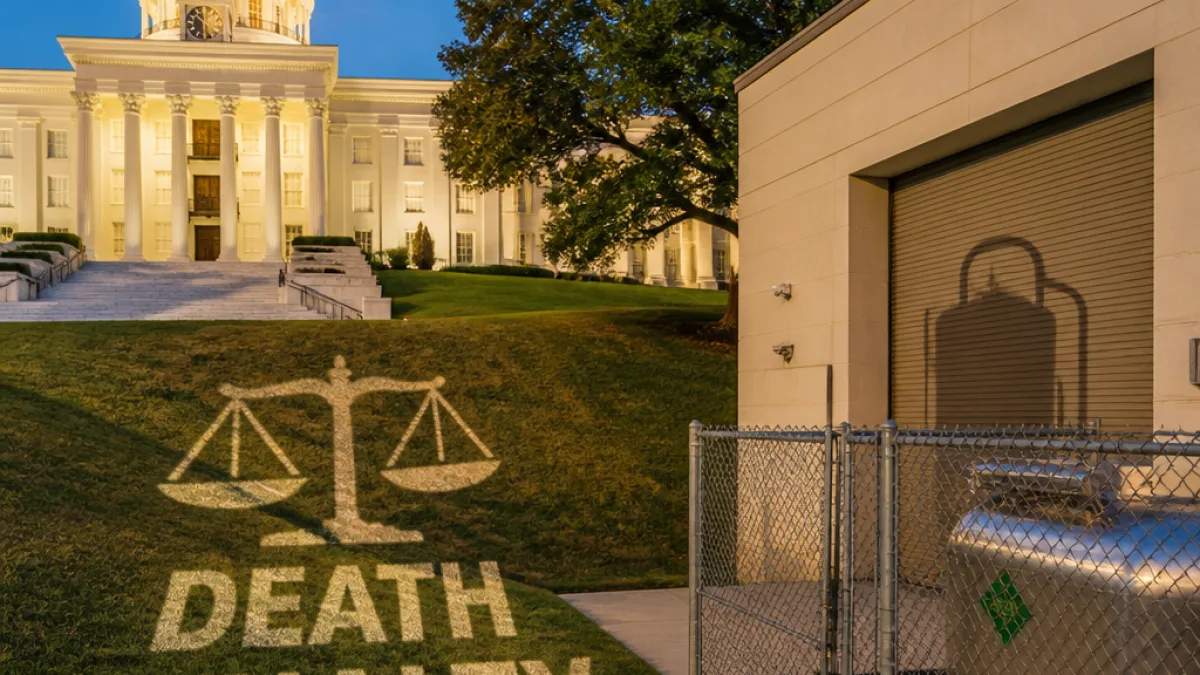
Alabama continues to stand out nationally for its use of capital punishment even as the broader United States moves toward fewer death sentences and increased questioning of how the system operates. The state’s recent adoption of nitrogen hypoxia as an execution method has intensified legal and ethical scrutiny and placed Alabama at the center of a shifting conversation about the future of the death penalty.
National trends influence local debate
Across the country, juries are imposing death sentences less frequently than in past decades, and polls show waning public support for capital punishment. Legal scholars and criminal-justice experts say the conversation has shifted from a binary question of whether the death penalty should exist to concerns about whether it is administered fairly, consistently and transparently.
Those national patterns are reflected in courtrooms and prosecutor offices, where decisions about seeking the death penalty increasingly occur against a backdrop of evolving legal standards, mounting litigation and changing public attitudes.
Alabama’s high-profile role
Alabama has remained among the country’s most active states in carrying out executions. The state also drew national attention when it became the first to execute an inmate using nitrogen hypoxia, a method supporters say addresses legal and logistical problems tied to lethal injection. Opponents counter that the procedure had not been tried in a real-world context before being used and that questions persist about whether it meets constitutional protections against cruel and unusual punishment.
That development has made Alabama a focal point in broader debates over execution protocols, transparency of procedures and the adequacy of legal safeguards for condemned inmates.
Legal and ethical concerns
Advocates on both sides of the issue frame their positions around justice and public safety. Supporters of capital punishment argue it can provide closure for victims’ families and serve as an appropriate response to the most serious crimes. Critics emphasize systemic problems — from racial disparities and uneven application to errors revealed by new evidence — and say those issues undermine confidence in imposing the ultimate penalty.
Legal challenges have followed Alabama’s procedural decisions, with courts weighing whether new execution methods comply with constitutional limits. Defense attorneys and civil-rights groups have pressed for greater transparency and safeguards in carrying out death sentences.
What experts are saying
Researchers who study capital punishment point to a long-term decline in new death sentences nationwide, as well as reduced public enthusiasm for the practice compared with previous decades. Those trends have prompted prosecutors, legislators and juries to reassess when and how to pursue capital cases.
- Declining new death sentences — juries are handing down fewer death penalties nationwide.
- Reduced public support — polling shows lower approval for capital punishment than in earlier eras.
- Heightened legal scrutiny — new execution methods and procedural questions are producing litigation and debate.
Local officials in Alabama must navigate these national shifts while addressing expectations from victims’ families, prosecutors and advocacy groups that hold divergent views about the role of capital punishment.
How Alabama’s experience fits into the bigger picture
Observers say Alabama’s recent choices regarding execution methods and its continued use of capital punishment reflect the patchwork nature of how the death penalty is applied across the United States. While some states have moved to abolish capital punishment or impose moratoriums, others, including Alabama, have maintained active death-penalty systems and pursued different approaches to execution protocols.
| Topic | Alabama detail |
|---|---|
| Execution methods | Adopted nitrogen hypoxia for execution |
| Activity level | Among the nation’s most active death-penalty states |
As litigation and policy discussions continue, the outcome in Alabama could influence practices and court decisions in other states wrestling with similar challenges. Lawmakers, judges and attorneys will be watching closely as courts consider constitutional arguments and as public debate evolves.
The state’s place in the national conversation underscores how capital punishment remains a complex blend of law, ethics and public policy — a subject that is likely to draw continued scrutiny as legal challenges progress and as attitudes continue to shift.