A law group with ties to Southport has carried out a practical, visible move in the fight against knife harm by replacing conventional kitchen knives with round‑tip blades across its offices after pledging support to the Let’s Be Blunt campaign.
From survivor to campaigner
The campaign was founded by a survivor of the 2024 attack that struck a Taylor Swift‑themed workshop in Southport. The woman, who was attacked in that class and suffered five stab wounds, later set up the community interest company Let’s Be Blunt to promote safer knife design and practical measures to reduce harm.
She is a client of Broudie Jackson Canter, part of the wider MAPD Group of legal firms that has now become the first legal business to sign up to the safer knife drive. After hosting seminars on the evidence supporting safer knife design, she visited firm offices to explain the practical steps businesses can take.
What the MAPD Group did
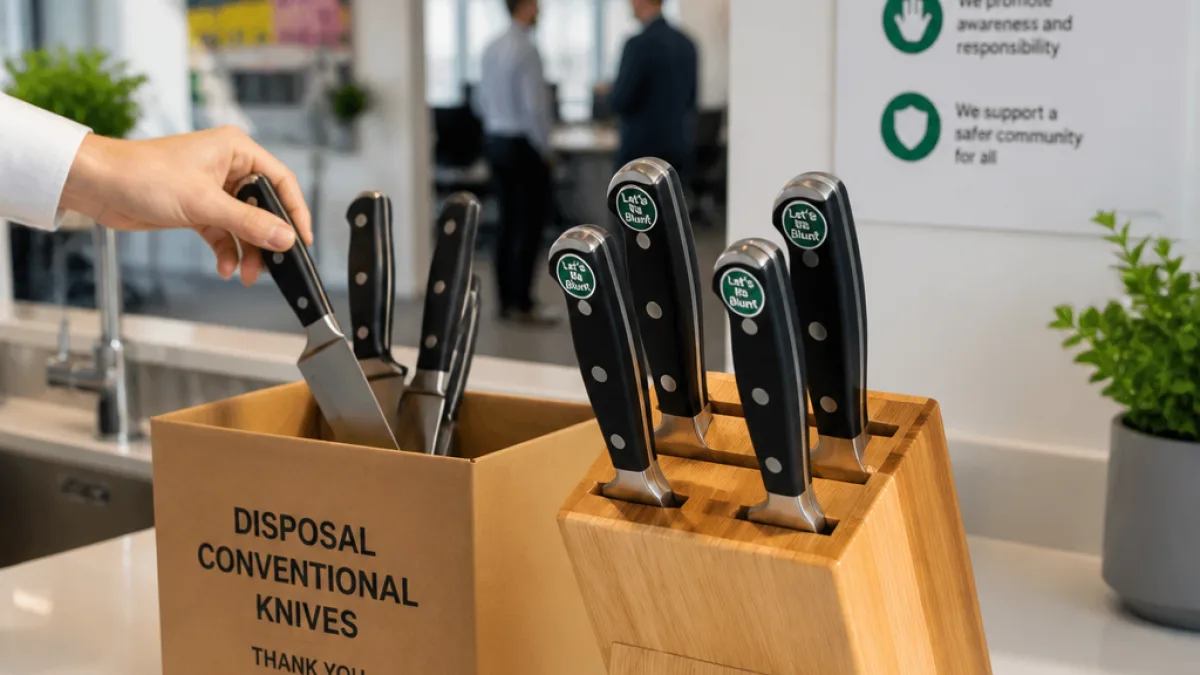
The MAPD Group — which brings together Broudie Jackson Canter, Jackson Lees, Farrington Law, Bermans, Bromleys Solicitors and Myers & Co — has removed more than 40 knives across its 15 offices, replacing standard kitchen knives with round‑tip blades. The firm intends to dispose of the withdrawn knives via local authority safety bins so they can be melted or crushed.
- More than 40 knives removed
- Action taken across 15 offices
- Practical disposal planned through local authority safety bins
The group said it hoped the step would create a ripple effect across the legal sector, encouraging other firms to follow suit.
“Through our work representing the three adult survivors of the Southport attack at the independent Inquiry… we know first‑hand the importance of prevention and education and hope other firms will follow our lead,”
The quote came from Esther Leach, managing director of Jackson Lees Group, who described the campaign founder as “an inspiration, taking her horrendous experience and turning it into something that can help countless others.”
Why the change matters
Let’s Be Blunt argues that switching to round‑tip knives is a practical, evidence‑informed step that can reduce the severity of some injuries and start a national conversation about safer design. The campaign combines prevention — changing the kinds of knives in everyday use — with education about how design influences harm.
Official figures cited by the campaign underline the scale of the issue: the Office for National Statistics’ homicide data for 2025 shows the kitchen knife is the most commonly used weapon in fatal stabbings, accounting for around 46% of cases.
| Statistic | Figure |
|---|---|
| Kitchen knife involvement in fatal stabbings (ONS, 2025) | ~46% |
| Knives replaced by MAPD Group | >40 |
| MAPD Group offices involved | 15 |
Local consequences and next steps
The move by a regional legal group based around firms with strong North West roots — and a direct client link to the Southport attack — is significant because it brings the conversation about knife safety into everyday workplaces. It is a symbolic step and a practical one: replacing knives in staff kitchens is something other businesses can copy quickly.
MAPD says it wants other legal firms to remove traditional kitchen knives and use local authority safety bins for disposal. The call to action is straightforward and targeted at workplaces where ordinary kitchen knives are kept for staff use.
Campaigners and the firms involved are emphasising that this is not a silver‑bullet solution to knife crime but a piece of a broader prevention strategy that includes education, support for survivors and design choices that reduce harm.
For Southport residents, the story is a reminder that community resilience often starts with local people turning trauma into practical change, and that everyday decisions — even what type of knife sits in an office kitchen drawer — can form part of a wider public‑safety conversation.