
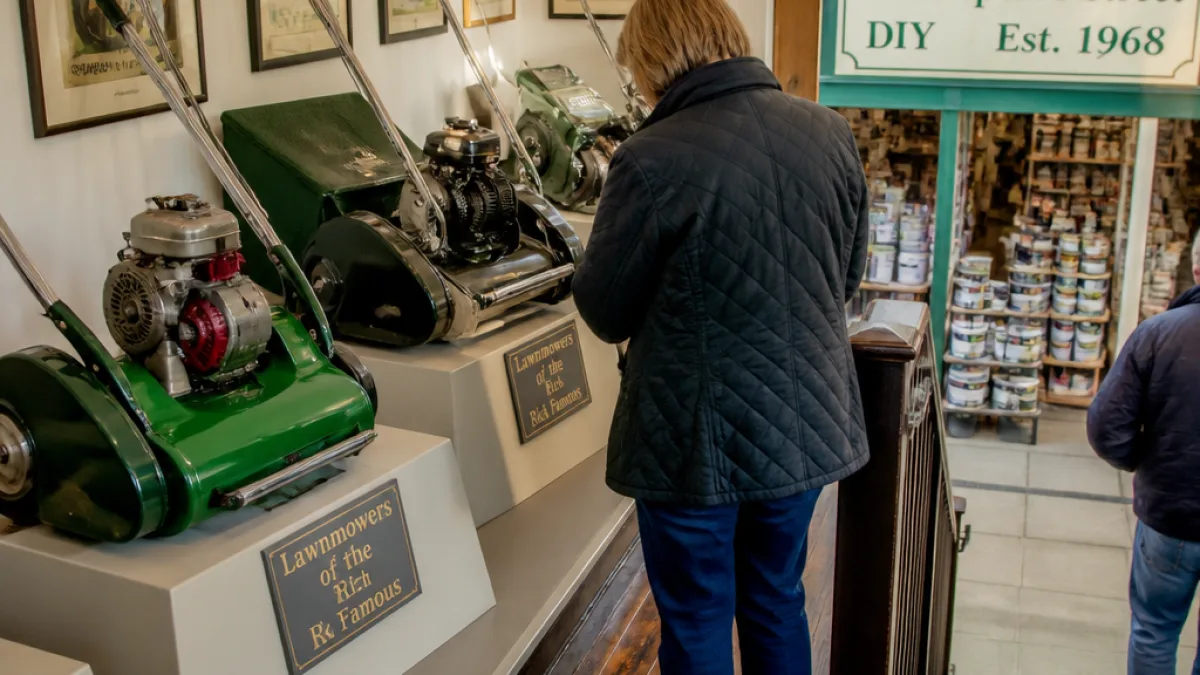
The British Lawnmower Museum on Shakespeare Street remains one of Southport's most singular draws, housing a collection of garden machinery with ties to public figures and a retail business that traces its roots in the town back more than eight decades.
From a family shop to a specialist museum
The museum sits above and alongside Lawnmowerworld, a DIY shop still run by the family that opened Southport’s first DIY store in 1940. The enterprise grew from earlier family trade in Bootle before the Second World War; the Bootle shop was bombed and the family relocated to Southport where they established the business that endures today.
Visitors to the museum see early examples of garden machinery and a roster of machines with celebrity provenance assembled under the museum’s ‘Lawnmowers of the Rich & Famous’ section. The display underlines both the social history of domestic labour and the quirky ways public figures are woven into local cultural life.
Notable items and celebrity connections
The collection includes mowers once owned by senior members of the royal family, entertainers and public figures. Among the more eye-catching items are a lawnmower given to then-Prince Charles and Princess Diana as a wedding present and a machine donated by Queen guitarist Brian May, who phoned the museum and asked whether his lawnmower could be given a ‘happy retirement’ on display.
“He said he wanted it to have a happy retirement, which will be the same for himself when he retires,”
Other named items include a flamboyant machine associated with Merseyside entertainer Paul O’Grady — described by the museum owner as having a leopard-print cutting plate and pink furry handle bars — and mowers linked to comic and acting figures who once trained or worked as engineers.
- Royal connection: A wedding-present mower for Charles and Diana.
- Music world: Brian May donated his lawnmower after ringing the museum.
- Local colour: Paul O’Grady’s distinctive machine is part of the display.
Heritage, tourism and Southport’s civic story
The museum positions itself as a guardian of an aspect of social and industrial heritage often overlooked — the tools and technology of domestic gardening. It attracts a varied audience, including international visitors; the owner recounted recent guests who combined a visit to the museum with trips to historic gardens and other regional attractions.
That cross-over underlines the museum’s role in local tourism: it complements Southport’s established seaside offer with a niche cultural attraction. Such institutions can help broaden the town’s visitor appeal beyond the traditional summer economy and draw interest year-round.
| Feature | Example |
|---|---|
| Historic artefacts | Early lawnmower models |
| Celebrity donations | Brian May; Paul O’Grady; machines linked to royal family |
| Associated business | Lawnmowerworld DIY shop (family-run since 1940) |
For Southport residents the museum is both a matter of local pride and a tangible reminder of long-standing small-business resilience. The continuity of the family-run shop — surviving wartime displacement and operating for generations — is part of the town’s own story of endurance and reinvention.
While the museum’s subject might provoke a smile, it performs a serious cultural job: preserving examples of engineering, everyday technology and the small domestic rituals of past decades. It also demonstrates how local museums can harness unexpected celebrity connections to keep collections relevant and draw visitors who might otherwise pass through Southport without stopping.
As the town continues to develop its visitor offer, institutions like the British Lawnmower Museum provide a unique selling point: they are compact, low-cost to run compared with larger attractions, and rich in stories that link Southport to national and international figures. For anyone interested in social history with a twist, the museum remains an odd, affectionate and worthwhile stop in the town centre.














