
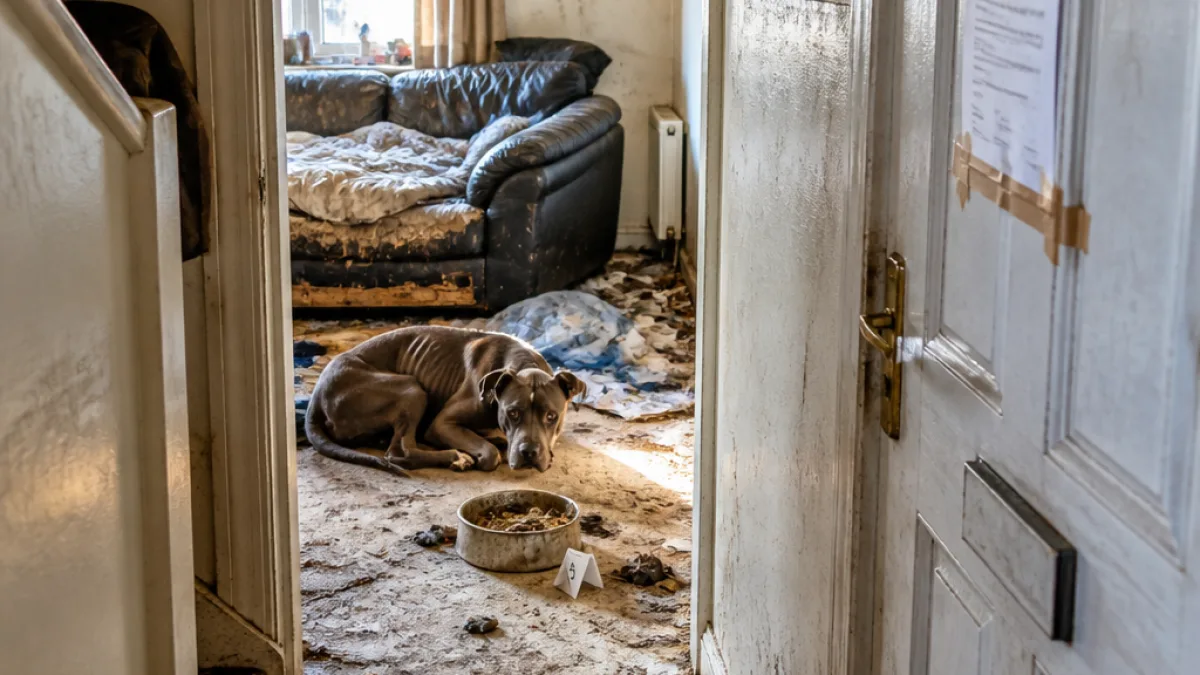
Owner banned after RSPCA find dog 'very skinny' in filthy Rochdale home
A man has been prohibited from keeping animals for 15 years after RSPCA officers found a severely underweight dog living amid rubbish and faeces at a property in Rochdale.
Inspectors were alerted after members of the public expressed concern that a dog had been left unattended at an address linked to the suspect. When officers visited on 6 August last year they saw the animal through the letterbox and described it as "looking very skinny".
Inspector Beth Fazackerley pushed wet food through the letterbox. The dog, a bull-breed named Kano, ate the food. Calls for the occupant to come to the door were unanswered and a warrant was later obtained. When officers returned with a police officer and gained entry, Kano "walked around five metres and then slumped to the ground", the RSPCA reported.
- Owner: Paul Dawson, 37, of Brownside Road, Burnley.
- Location: Property on Alice Street, Rochdale.
- Court: Tameside Magistrates' Court, plea and ban recorded on 31 July.
RSPCA officers reported Kano was covered in "large clumps" of fleas and was scratching repeatedly. They saw his ribs, hip bones, spine and other bones were easily visible. Inspectors noted wounds with scabs above his left shoulder and on his right elbow, untrimmed nails and dirty fur and skin with a "brown crust" visible in multiple places and fur loss around his head.
"His ribs, hip bones, spine and other bones were easily visible."
Photos taken at the scene showed a filthy mattress and rubbish scattered across the floor, with belongings and faeces piled high. Kano was taken for urgent veterinary treatment; the vet found he was suffering from hunger and severe weight loss and concluded he had been suffering for a minimum of three weeks, and likely longer.
Veterinary notes recorded that Kano was "very hungry when food was offered" and that no preventative treatment had been provided for flea infestation. The RSPCA told the court that the combination of starvation, untreated fleas and wounds amounted to unnecessary suffering.
Legal outcome and wider implications
Dawson, 37, pleaded guilty to three offences of causing unnecessary suffering to an animal at Tameside Magistrates' Court and was issued the 15-year ban on keeping animals. The order is designed to prevent further harm to animals and is a significant restriction on Dawson’s future pet ownership.
The case underlines how public vigilance and prompt reporting can lead to swift intervention. RSPCA officers rely on members of the community to flag concerns — in this instance, that action led to Kano being rescued and given treatment.
For Rochdale residents, the incident is a reminder of the borough’s animal welfare obligations. Historically, prosecutions and bans are imposed when inspectors and vets find clear evidence of neglect or deliberate mistreatment. Legal penalties — including long-term bans — are intended both to punish and to protect.
| Item | Detail |
|---|---|
| Animal | Kano, bull-breed dog |
| Owner | Paul Dawson, 37 |
| Offences | Three charges of causing unnecessary suffering |
| Sentence | 15-year ban on keeping animals |
What to do if you suspect animal neglect
RSPCA inspectors urged people to report concerns about animals. Quick reports allow officers to assess welfare and, where necessary, obtain warrants to enter properties and rescue animals at risk. In cases of visible neglect — extreme weight loss, heavy flea infestation, wounds, or squalid living conditions — the charity and the courts will act.
This incident will be watched by local animal welfare groups and neighbours alike. While the court's ban stops one person from keeping animals, the broader task is ensuring the borough remains vigilant and that pets receive proper care.
The RSPCA said Kano received urgent treatment and care following his rescue. No further detail on the dog’s long-term recovery was provided in the court report.
The case serves as a stark example of neglect in Rochdale. It also shows the system working: concerned citizens, RSPCA inspectors, veterinary staff and the courts combining to protect an animal in distress.















