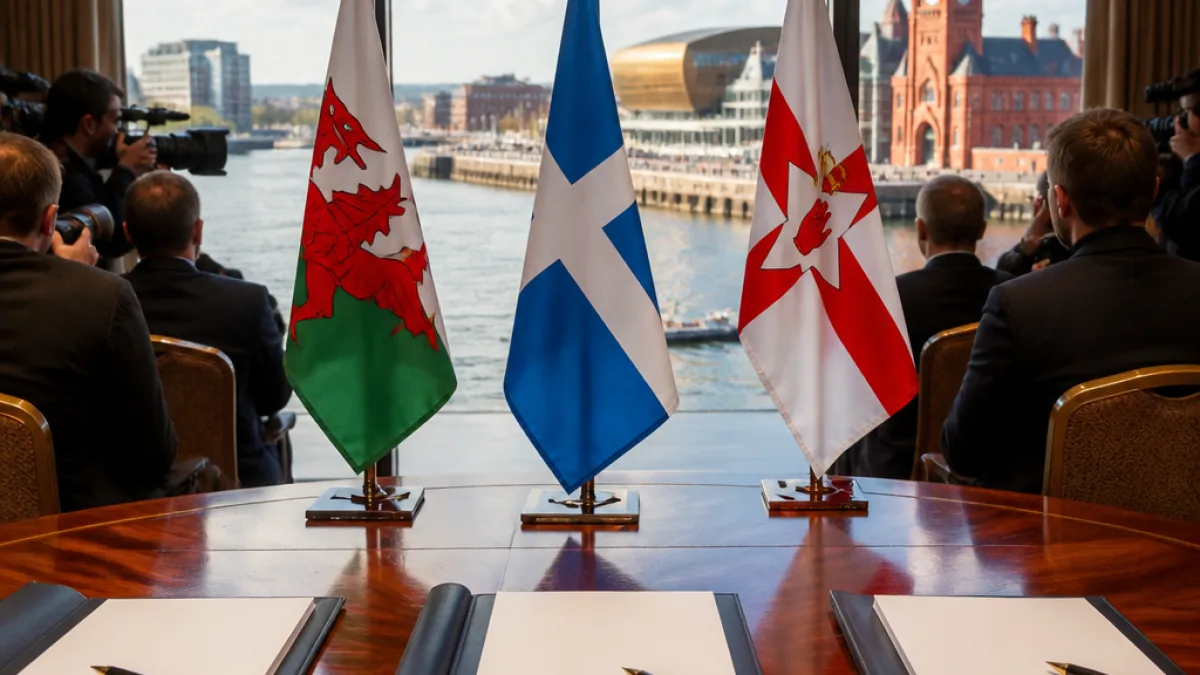
The leaders of Wales, Scotland and Northern Ireland’s governing parties are meeting in Cardiff to sign a joint declaration calling for the right to hold independence referendums and to press for greater recognition of their nations’ rights to determine constitutional futures.
Summit in the capital
The memorandum of understanding, due to be signed by Plaid Cymru leader Rhun ap Iorwerth, Scottish National Party leader John Swinney and Sinn Féin vice-president and Northern Ireland leader Michelle O’Neill, will be signed in Cardiff on Monday. The document is intended to increase pressure on the UK Government to recognise the democratic right of people in each nation to decide their constitutional arrangements.
The three political figures are meeting in their capacities as party leaders rather than as first ministers, and are also expected to discuss co-operation between their governments on areas such as funding, powers and shared policy goals.
What the declaration aims to achieve
Organisers say the memorandum will set out a joint position asserting the principle that people in Wales, Scotland and Northern Ireland should have the ability to determine their futures through referendums where appropriate. The move renews a constitutional debate that successive UK governments have resisted since Scotland’s 2014 independence vote.
- Signatories: Rhun ap Iorwerth, John Swinney, Michelle O’Neill
- Main aim: Press Westminster to recognise the right to hold independence referendums
- Secondary themes: Fair funding, devolved powers and practical co-operation
In recent days the question of future referendums has resurfaced in Westminster discourse after remarks by Greater Manchester mayor Andy Burnham, who told the House of Commons that another Scottish independence referendum could be held if there was a “clear consensus” for one. Downing Street, however, subsequently emphasised that there had been no change in government policy, and a letter from Mr Burnham to Mr Swinney said another referendum remained “off limits”.
“We’re talking about how we can work together, let’s talk about what we have in common and what we don’t,”
Mr ap Iorwerth told the BBC’s Sunday With Laura Kuenssberg that the leaders would discuss both areas of agreement and difference. He added that there was a shared pursuit of “a different attitude from UK Government” and that the conversation could range from constitutional matters to issues such as fair funding and the powers needed to build Wales’ future.
Local implications for Cardiff and Wales
For Cardiff residents, the summit brings the constitutional debate to the capital’s doorstep. The memorandum may not immediately change legal arrangements — referendums and constitutional questions are complex and legally constrained — but it marks a coordinated political push by pro-independence administrations to place these issues firmly on the national agenda.
Beyond the headline constitutional aim, participants say the meeting will cover areas where the devolved governments can co-operate practically. That emphasis on co-operation may produce nearer-term outcomes on matters such as co-ordinated lobbying for funding formulas and shared approaches to devolved responsibilities.
| Leader | Role |
|---|---|
| Rhun ap Iorwerth | Plaid Cymru leader |
| John Swinney | SNP leader |
| Michelle O’Neill | Sinn Féin vice-president / Northern Ireland leader |
The gathering also underscores an unusual political alignment: pro-independence parties now head governments in Scotland, Wales and Northern Ireland. That reality is being used by the signatories to argue that the current constitutional settlement is under strain and that Westminster must engage with their demands.
As the summit concludes in Cardiff, the immediate question for residents and local officials will be whether a political declaration signed in the city translates into tangible shifts in negotiations with Westminster over powers, funding and the procedural pathway to any future referendums. For now the memorandum is a political signal — a coordinated effort to press for recognition of the principle that populations in Wales, Scotland and Northern Ireland should be able to decide their constitutional futures.