Environment Agency probes three large dumps including Hartlepool
Investigators from the Environment Agency are sifting through commercial waste uncovered at a series of major fly‑tipping sites across the north‑east of England, after officers described the activity as "large‑scale industrial dumping". One of the locations identified this summer is in Hartlepool, alongside sites at Peterlee and Callerton Hill near Newcastle Airport.
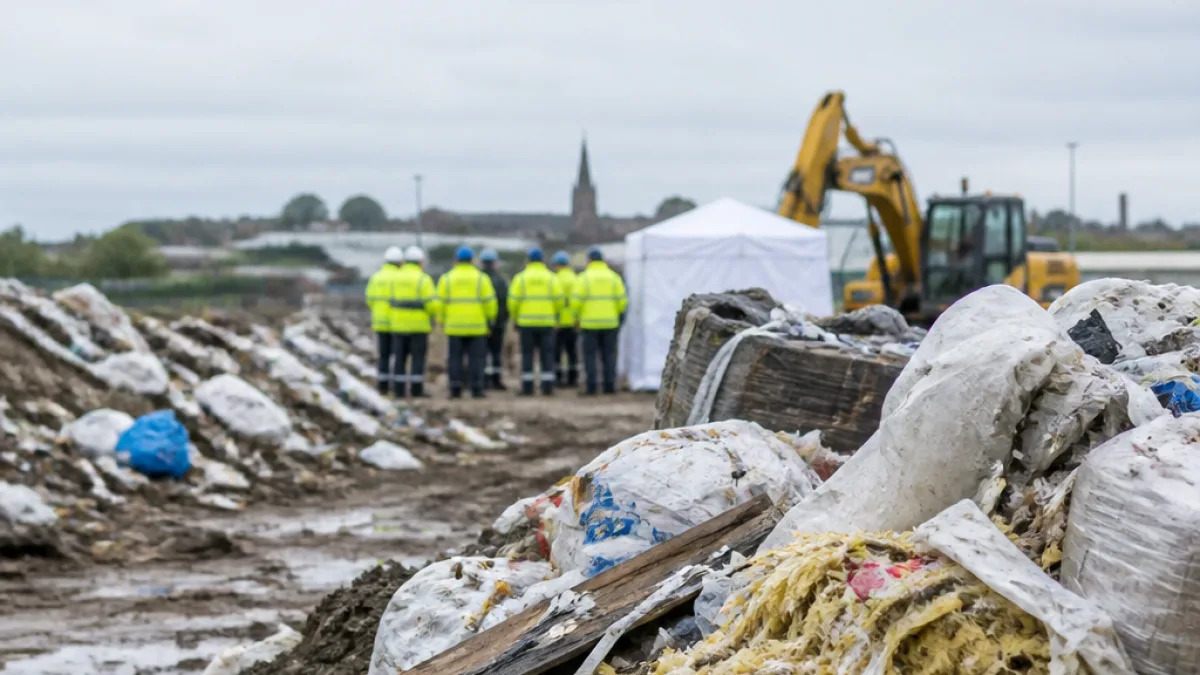
The most substantial pile currently under forensic examination is at Callerton Hill, where the agency estimates roughly 400 tonnes of waste was dumped. EA crime team officers are combing the material for evidence that could identify those responsible and establish the waste's provenance.
"There had been 'large‑scale industrial dumping' and warned landowners were responsible for footing the clean‑up bill."
Mark Rumble of the Environment Agency has said that items found at the Newcastle site probably came from a waste processing facility, a line of inquiry that shifts the investigation towards commercial operators as well as those who transport and deposit material illegally.
Local impact and responsibility
The EA has emphasised that landowners where illegal waste is deposited are ultimately liable for the costs of clearing it. That warning has heightened concern among communities and managers of affected land in Hartlepool, who face the practical and financial burden of restoring sites to a safe condition.
Joe Morris, the Labour MP for Hexham, linked the incidents to organised crime and called for a stronger response from authorities. He said efforts should focus on pursuing those responsible while also ensuring victims of the crime – whether community groups or private landowners – receive practical support.
- Sites under investigation: Callerton Hill (near Newcastle Airport), Hartlepool, Peterlee.
- Estimated quantity at Callerton Hill: 400 tonnes of commercial waste.
- Lead agency: Environment Agency crime team conducting forensic searches.
For Hartlepool residents, the revelations underscore a broader problem that councils and environmental regulators have warned about in recent years: illegal dumping on an industrial scale can present hazards to public health, damage the natural environment and transfer significant costs to local communities.
Evidence gathering and next steps
EA crime teams are now engaged in methodical searches of the material to trace its origin. Items recovered during such operations can provide documentary or physical evidence — for example commercial paperwork, distinctive packaging or machinery parts — that may indicate where the waste was generated and who handled it.
| Site | Known detail |
|---|---|
| Callerton Hill (Newcastle) | Approximately 400 tonnes of commercial waste under examination |
| Hartlepool | Identified as one of three major dump sites discovered this summer |
| Peterlee | Also identified among the three large sites |
Authorities have already warned that tackling this type of offending requires coordination between regulators, law enforcement and local communities. The EA's messaging makes clear that while the agency will pursue criminal investigations, immediate costs for clearing land often fall on those who own or manage it.
For Hartlepool, the episode raises immediate questions about the scale of illegal waste activity in the borough and the resources available to respond. Residents and landowners will expect a clear timetable for clean‑up, explanations about how waste movement will be monitored going forward, and assurance that those responsible will be identified and held to account.
As forensic work continues at Callerton Hill and inquiries proceed in Hartlepool and Peterlee, the Environment Agency and local representatives face the challenge of balancing investigation with rapid remedial action to limit ongoing harm and expense to communities.