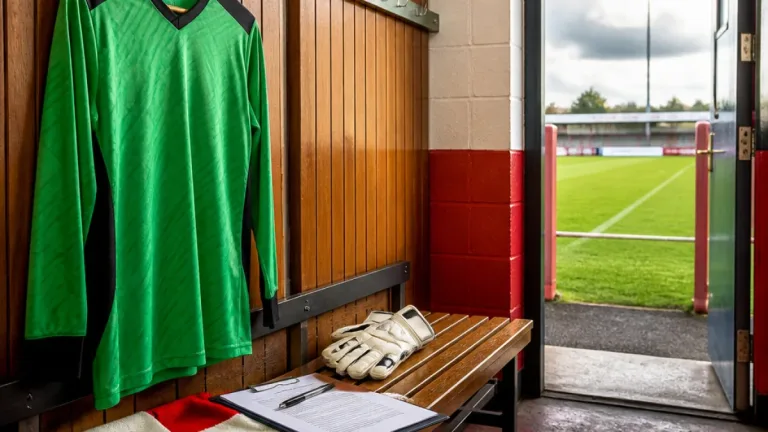

Rylee Foster-Inman has become the first player to transfer directly from the Northern Super League (NSL) to England’s Women’s Super League (WSL), returning to Everton after a stint with Halifax Tides in the NSL. The move underlines the growing profile of the NSL as a pathway for players aiming to re-enter top-level European competition.
From NSL to WSL — a new route
Foster-Inman’s transfer is notable for breaking new ground: she is the first player to make a direct move from the NSL to the WSL. The goalkeeper, who joined Halifax Tides in January 2026, arrives at Everton with prior WSL experience and an international club career that spans North America, Australasia and Europe. For a fledgling league in only its second season, the NSL’s claim that it can serve as part of a player’s career trajectory has tangible evidence in this transfer.
- Player: Rylee Foster-Inman
- From: Halifax Tides (Northern Super League)
- To: Everton (Women’s Super League)
Career context and significance
Foster-Inman, originally from Kitchener, Ontario, has a record that includes collegiate football at West Virginia University and a professional debut for Liverpool in 2021, when she earned a Player of the Month award. She later joined Wellington Phoenix, where she resumed professional football following a serious car accident in 2021 and picked up multiple A-League Women Player of the Month awards. Her career subsequently brought her back to England with Everton in 2024, followed by time at Durham and a spell in the United States with Dallas Trinity, before signing for Halifax Tides in January 2026.
Those varied experiences make her return to Everton noteworthy because she is not entering the WSL for the first time; she is rejoining a competition she already knows. Observers say that gives the transfer particular value for both the player and the NSL: it demonstrates that the Canadian league can be a stepping stone or a staging post rather than a cul-de-sac for talent aiming for Europe.
“This is what the NSL is, what it can be, and will be,”
The remark, made by Foster-Inman on the announcement of her move, has been widely cited as emblematic of the NSL’s ambitions. For supporters and players, it signals that the new domestic league can provide competitive minutes and visibility that attract attention from established overseas clubs.
Local implications for supporters and aspiring players
For football followers here in Halifax (West Yorkshire), the transfer will be of interest on a number of levels. Everton are a well-known WSL side with an established profile in English women’s football, and any connection to that level attracts attention among local grass-roots players and coaches who monitor career routes into the professional game. While the Halifax Tides club referred to in this transfer is the Canadian side, the narrative of a player advancing from a newly formed domestic league to a top European competition will be scrutinised by those involved in women’s football development at county and club levels across the region.
The move also raises questions about scouting, talent pathways and the value of international playing experience. Coaches and academy directors will consider how varied playing environments — across leagues and continents — can shape a player’s readiness for top-flight competition. Foster-Inman’s route, which includes recovery from a serious injury and time in multiple countries, may encourage a broader view of career development beyond immediate local or national options.
For the NSL, tangible transfers into established competitions such as the WSL will be an important metric of success as the league seeks to retain and develop talent while offering visibility to its players. For local fans in Halifax interested in the women’s game, Foster-Inman’s move is a reminder that the structures shaping modern women’s football are international and increasingly fluid.