
Names that surprise, amuse and sometimes stump newcomers
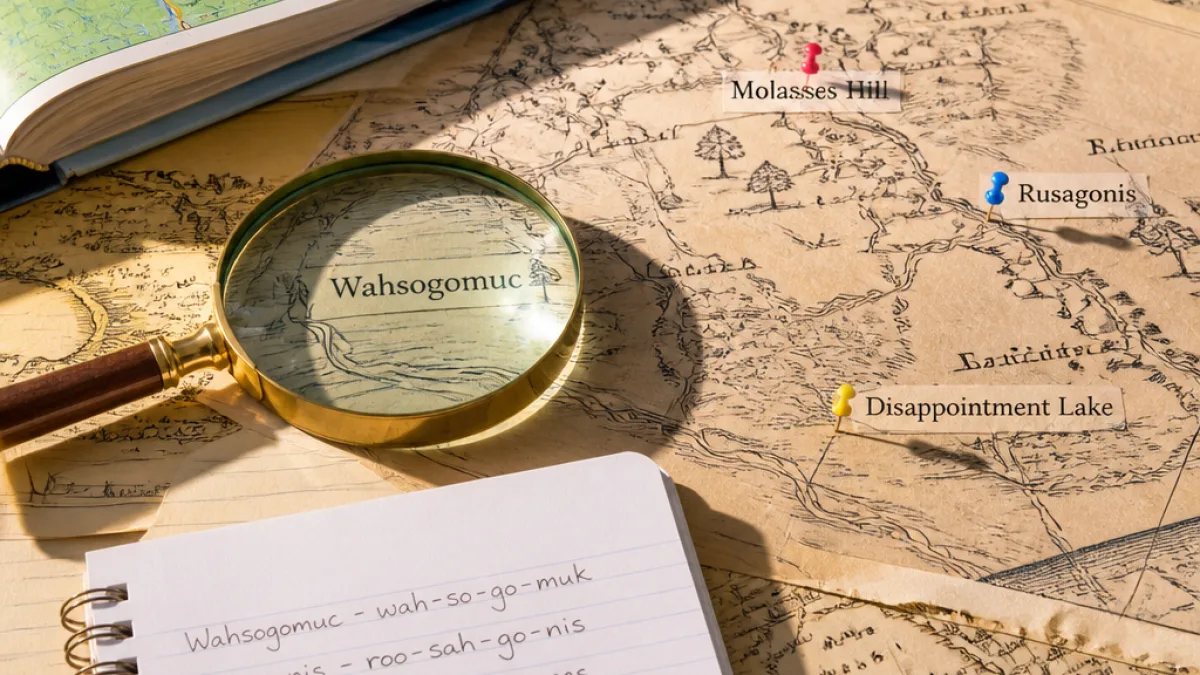
New Brunswickers are well acquainted with place names that raise eyebrows or prompt a smile. From the mouthwatering Molasses Hill to the rueful-sounding Disappointment Lake, the province’s toponyms tell stories of Indigenous heritage, European settlement and local humour.
Local historians say the patchwork of names comes from successive waves of people — Indigenous communities first, followed by French settlers and later English-speaking arrivals — each leaving a linguistic imprint that sometimes collided, sometimes blended.
“Don’t think this is just a, you know, a one-stop-shop kind of a thing,”
said columnist James Upham, describing how New Brunswick’s roster of place names ranges from the prosaic to the colourful. Maurice Basque, a historian at the Université de Moncton, notes the province’s toponymy is a product of those layered influences.
Pronunciation can be a local art
Some names look straightforward on a map but are pronounced in ways that puzzle outsiders. The community spelled Rusagonis is a frequent example — locals often say it in a way that seems to add sounds or shuffle syllables, a reminder that written spellings don’t always capture local speech.
Other well-known names, such as Miramichi, Kouchibouguac and Kennebecasis, can be challenging for visitors. Those names reflect Mi’kmaq and Acadian origins and have been adapted over time into English and French-speaking usage.
Why names endure — and what they reveal
Place names are more than labels: they can encode history, geography and attitude. Some commemorate events or features, others are translations or adaptations of Indigenous words, and a few seem to capture the mood or experience of early settlers — hence names like Vinegar Hill or the memorably blunt Raggedy Ass Falls.
Historians such as Basque emphasise that the province’s toponyms are a living record of cultural contact and change. That mix explains why a small geographic area can have several names layered on top of one another, each with a different linguistic origin or local twist.
Examples and local pronunciations
Below are selected examples that highlight the variety of origins and the sometimes surprising pronunciations New Brunswickers know well.
- Molasses Hill — a name that invites curiosity and speaks to a local flavour of naming.
- Disappointment Lake — a name reflecting early settlers’ experience or lore.
- Rusagonis — often pronounced in local speech differently than it looks on the map.
- Miramichi, Kouchibouguac, Kennebecasis — examples of Indigenous-origin names adapted across languages.
- Vinegar Hill, Raggedy Ass Falls — colourful examples of names born of humour or local anecdote.
| Place name | Notable feature | Origin |
|---|---|---|
| Rusagonis | Locally idiosyncratic pronunciation | Likely Indigenous or adapted from early settlers |
| Miramichi | Major river and region | Mi’kmaq/Indigenous origin |
| Vinegar Hill | Colourful, anecdotal name | English settlers’ label |
Practical tips for visitors and new residents
For newcomers, a little local listening goes a long way. Pronunciation often follows local speech patterns rather than strict spelling rules. When in doubt:
- Ask a neighbour or local shopkeeper how they say a place name — people usually enjoy sharing the story behind it.
- Check community websites or bilingual municipal pages for pronunciation guides, particularly in areas with strong Acadian or Indigenous presence.
- Respect Indigenous place names and their meanings — many are tied to landscape and history.
Whether they are descriptive, humorous or the result of centuries-long language contact, New Brunswick’s place names are part of the province’s cultural landscape. They offer small windows into history and identity — and they remind residents and visitors alike that maps are as much repositories of stories as they are tools for navigation.
For those who grew up here, getting a name right is a marker of belonging. For newcomers, the learning curve is part of settling in — and often, the delight of discovering the odd, evocative name that becomes part of one’s own local vocabulary.