
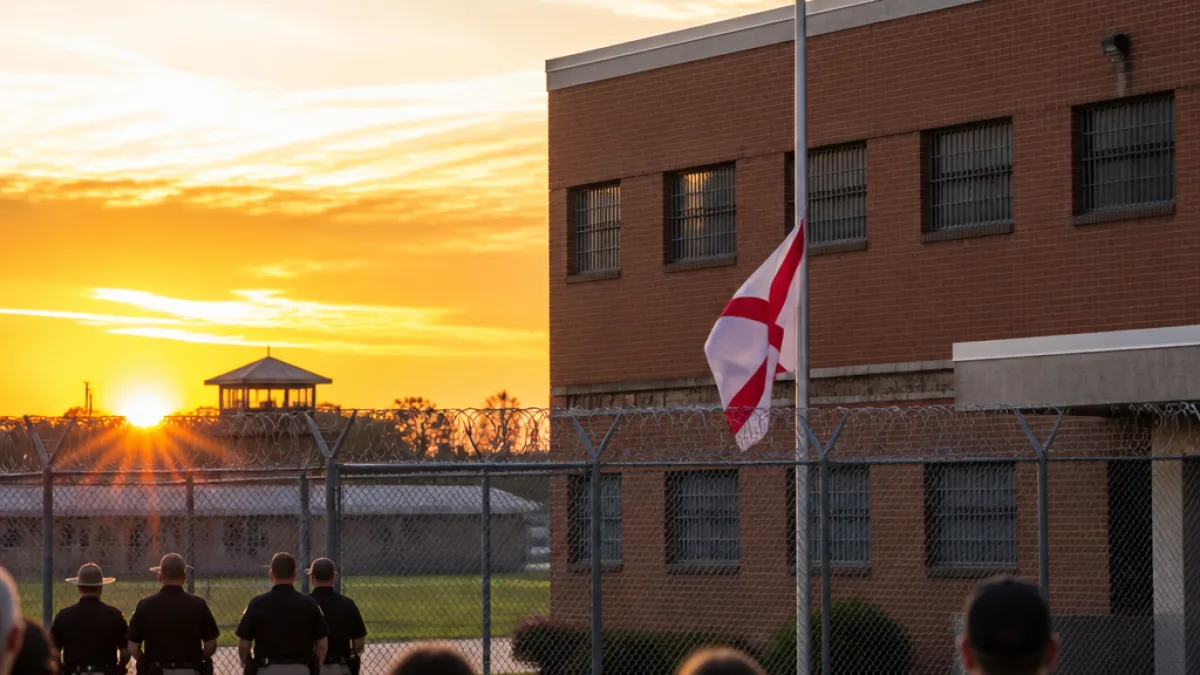
ATMORE, Ala. — The state of Alabama put Jeremy Williams to death by lethal injection on Aug. 13 for the 2021 rape and killing of 5-year-old Kamarie Holland, state officials and media witnesses said. Williams, 41, was pronounced dead at approximately 6:16 p.m. at the William C. Holman Correctional Facility.
Case background and conviction
Williams was convicted in 2024 after evidence presented at trial included a recording of the assault captured on his cellphone. Prosecutors said the recording showed the offenses that led to his conviction. In 2025, Williams declined to continue pursuing appeals and asked that his execution be scheduled without delay.
Execution procedure and witnesses
Media witnesses observed the execution from the viewing chamber. Those reporters described Williams being secured to the gurney, an intravenous line placed in his left arm and several people present to watch the procedure.
| Event | Approximate time (CT) |
|---|---|
| Drapes opened in viewing chamber | 5:53 p.m. |
| Witnesses observed Williams strapped to gurney | 5:56 p.m. |
| Pronouncement of death | 6:16 p.m. |
Reporters noted one of Williams’ visitors wore a blue T-shirt with the words "Mama loves you" and was visibly emotional throughout the proceedings. The Alabama Department of Corrections did not provide identities for the inmate’s witnesses.
Official reaction
"There are few words to adequately describe the depth and depravity of Jeremy Williams’ evil act. ... Kamarie Holland is an innocent girl who is no longer with us, but she finally received justice tonight. May God bless little Kamarie Holland."
The statement following the execution came from Governor Kay Ivey, who framed the outcome as an affirmation of Alabama’s capital punishment law and expressed sympathy for the victim’s family.
State context and timing
This was Alabama’s first execution of 2026. The state previously saw a scheduled execution earlier in the year delayed and a clemency review that halted another. Williams’ execution came after he withdrew his appeals, a step that can accelerate carrying out a death sentence.
- Victim: 5-year-old Kamarie Holland (died 2021)
- Convicted: Jeremy Williams (conviction in 2024)
- Method: Lethal injection
- Location: William C. Holman Correctional Facility, Atmore
Community and legal implications
Executions in Alabama remain contentious, drawing attention from victim advocates, death-penalty opponents and legal observers. Cases in which defendants waive appeals raise ethical and procedural questions about competency evaluations, the pace of capital prosecutions and the role of state oversight in ensuring that a rapid path to execution satisfies legal standards.
Local officials and the victim’s family have described the outcome as justice for Kamarie Holland. Meanwhile, death penalty critics argue that expedited executions can limit review of potentially mitigating circumstances and systemic errors.
What happened next
After the administered drugs were completed, corrections officials declared Williams dead at about 6:16 p.m.. The Department of Corrections provided logistical details to media observers but has not released additional internal documentation related to the execution timeline or the identities of witnesses on record.
The execution renews discussion across Alabama about capital punishment policy, victim restitution and support services for families affected by violent crime. Legal advocates on both sides of the death-penalty debate are likely to reference this case as they press for legislative and judicial changes.
Reporting for this story relied on accounts from media witnesses at the William C. Holman Correctional Facility and official statements issued after the execution.