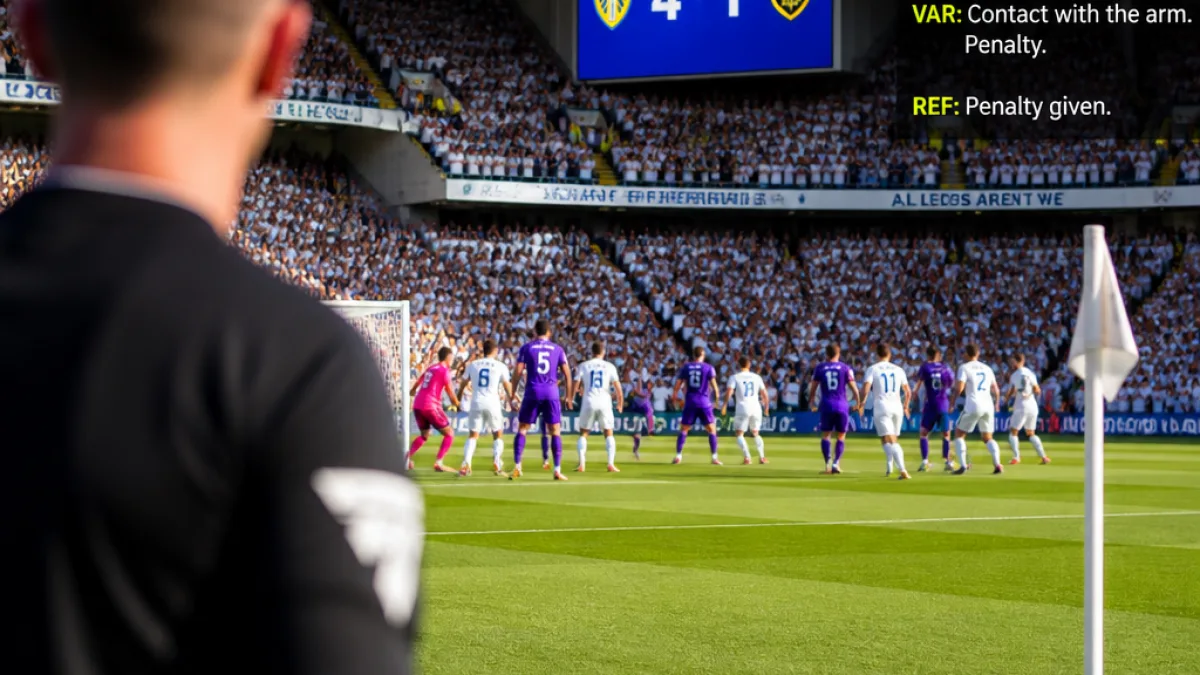
Leeds force respect from big opposition as United adopt cautious approach
Leeds United’s 1-1 draw with Manchester United at Elland Road on Sunday did more than earn a point: it prompted one of English football’s most recognised pundits to suggest the Whites are no longer viewed as an easy trip. Jamie Carragher said Manchester United approached the match "like you go away to a big team in Europe", a comparison that underlines how Leeds have reasserted themselves under manager Daniel Farke.
The match saw Leeds recover from a first-half deficit after Bryan Mbeumo gave the visitors the lead, with Dominic Calvert-Lewin cancelling it out to secure a share of the spoils. On the balance of play, Farke’s side enjoyed the better of the game: they held over 60 per cent possession and recorded an Expected Goals (xG) figure of 1.41 compared with Manchester United’s 0.92.
“The best way to explain it - and I've been there - is when you go away to a big team in Europe,” Carragher said on Monday Night Football. “It felt like a European away performance.”
Carragher’s assessment reflects how the visitors altered their approach. Manchester United set out to keep the game tight, adding an extra body in midfield and prioritising defensive solidity. That caution, he argued, was a compliment to Leeds’ progress; the visitors appeared content to stifle the game rather than risk exposure on the break.
There were tactical nuances that suggested respect rather than resignation. Michael Carrick, the Manchester United coach, admitted afterwards that his side had set up to match elements of Farke’s system, and deployed Amad Diallo in a role mirroring Jayden Bogle’s freedom to advance from wide areas. Carragher noted the similarity and said the shape felt like how United might set up away to a European heavyweight — a sign, he argued, of Leeds’ rising stature.
What the numbers say
Statistically the contest favoured Leeds. The possession statistic and xG advantage point to a side that controlled territory and created the better openings. Yet Leeds were left to rue wastefulness in the final third; they had roughly 40 minutes from which to find a winner after Calvert-Lewin’s leveller but were unable to convert that pressure into a decisive goal.
| Statistic | Leeds United | Manchester United |
|---|---|---|
| Final score | 1 | 1 |
| Possession | Over 60% | Under 40% |
| Expected Goals (xG) | 1.41 | 0.92 |
For Leeds supporters, the match offered reassurance even if frustration lingered at opportunities missed. The Whites have made encouraging strides in the early part of the season, and the manner of this performance — dominating phases against a club still competing in the Champions League — will be seized upon as evidence that Elland Road is once again a difficult place for top sides.
Local consequences and what to watch next
- Confidence boost — drawing with a traditionally dominant Manchester United will lift morale among supporters and players alike.
- Tactical validation — Farke’s approach, which prioritises ball progression and territorial control, appears to be earning respect from opponents.
- Finishing focus — the game highlighted a recurring need for sharper decisions and execution in the final third if Leeds are to turn control into more wins.
Daniel Farke’s team have shown they can compete with clubs who, on paper, possess greater resources. That does not guarantee results, but it changes the conversation around Leeds United in the city and beyond. Rather than opponents travelling to Elland Road expecting to dominate, they may now prepare for a contest — and that shift in perception is, in itself, a measure of progress for the club and its supporters.
For local fans, the enduring questions are familiar: can Leeds maintain this form across the season, and will the team convert possession and pressure into the consistent results required to climb the table? Sunday's draw will be remembered less for the single point and more for how it symbolised a club earning renewed respect on English football's biggest stage.