Chandigarh: The Supreme Court on Friday expressed serious concern over the escalating drug problem in Punjab, observing that the human cost of substance abuse in the state has become “alarming” and urging renewed action from both state and central agencies.
Bench urges systemic changes, faster trials
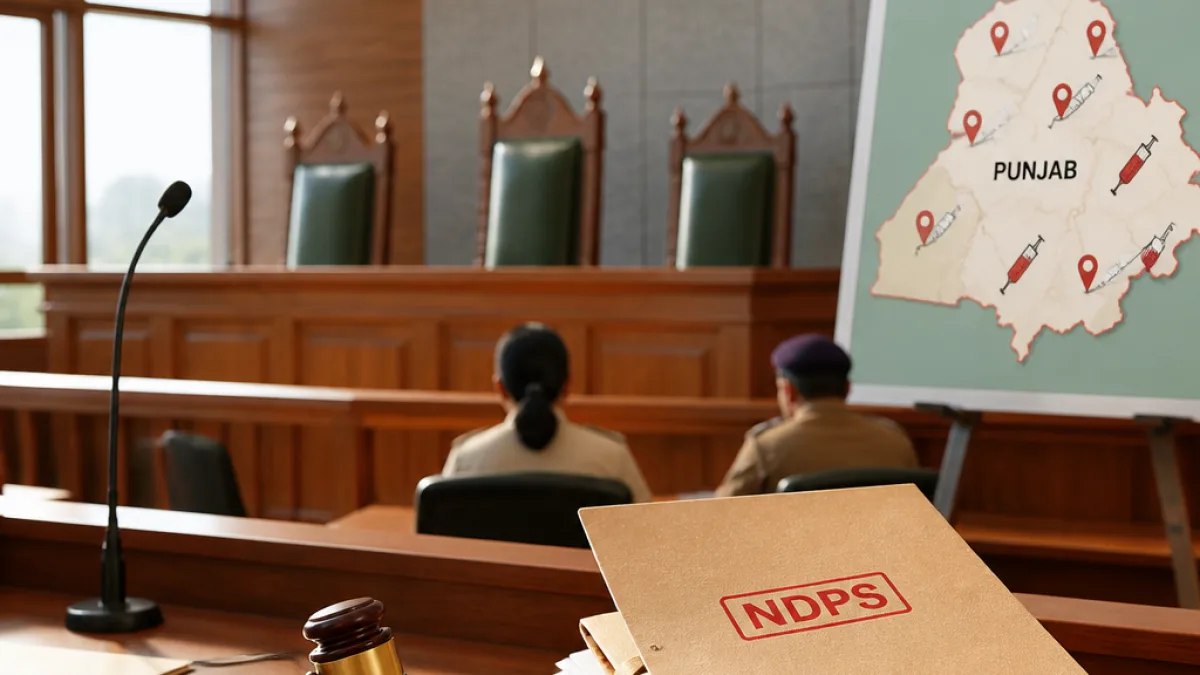
A bench comprising Chief Justice Surya Kant and Justice Joymalya Bagchi reviewed the situation and indicated that the matter may require central intervention if state efforts remain inadequate. The court criticised the state police for an apparent focus on low-level offenders while major traffickers continue to evade accountability, and flagged the backlog of cases registered under the Narcotic Drugs and Psychotropic Substances (NDPS) Act.
“The human toll is alarming,” the bench observed, underlining the urgency of a fundamental change in how the problem is tackled.
The bench proposed measures to streamline prosecutions by facilitating the setting up of specialised NDPS courts across states to expedite trials and reduce pendency. The court said it would assist in this exercise to ensure faster disposal of NDPS matters.
Focus shifted to trafficking networks, not just users
During the hearing, the apex court pulled up the state police for actions that appear to privilege publicity over impact, noting that arrests of small-time offenders do not dismantle trafficking networks. The bench emphasised the need for intelligence-led investigations and targeting of organisers and suppliers rather than concentrating primarily on end-users.
Legal observers say the court’s direction to consider central support reflects concern that tackling organised smuggling and cross-border supply chains may exceed the capacity of the state alone. The bench instructed both state and central agencies to work towards a common objective of eradicating the menace.
What the court directed and possible outcomes
- Facilitate creation of specialised NDPS courts in states to speed up trials.
- Encourage coordination between state and central agencies to tackle trafficking networks.
- Direct law enforcement to prioritise major traffickers over low-level arrests made for publicity.
While the court did not lay down a specific timeline in the remarks released publicly, it indicated a willingness to oversee measures that would improve prosecution efficiency and accountability in handling NDPS cases.
| Bench | Primary concern | Suggested step |
|---|---|---|
| Chief Justice Surya Kant & Justice Joymalya Bagchi | Large human toll; pendency of NDPS cases | Specialised NDPS courts; central-state coordination |
Local impact and administrative challenges
Punjab, which has long struggled with drug addiction in some districts, faces several interlinked challenges: persistent demand, local distribution networks, and alleged involvement of larger trafficking groups. The Supreme Court’s remarks put pressure on state authorities to re-evaluate their policing and prosecution strategies and to present an action plan that addresses both supply and demand.
Setting up specialised NDPS courts could shorten trial durations and reduce case backlogs, but implementation will require judicial postings, administrative resources and coordination between police, prosecutors and the judiciary. Central assistance may include funding, specialised training and intelligence support — measures the court signalled it could facilitate.
What families and communities can expect
The bench’s focus on the human toll — including reference to a reported case of a mother who lost multiple sons to drug addiction — highlights the social cost borne by families and communities. Faster trials and targeted action against traffickers aim to deliver swifter justice and disrupt supply chains, but community-level rehabilitation and prevention will remain critical to reduce demand.
Officials in Punjab now face a narrow window to demonstrate concrete improvements. The Supreme Court has made clear that token measures and publicity-driven arrests will not satisfy judicial scrutiny if larger trafficking structures remain active.
The matter may return to the court for further directions once the state and central agencies outline the steps they will take to address the concerns raised.
Gurpreet Kaur is the Punjab correspondent. Reporting from Chandigarh.