CHANDIGARH: The Punjab government on Independence Day publicly recognised members of Village Defence Committees (VDCs) and Ward Defence Committees (WDCs) for their role in the state’s ‘War Against Drugs’ campaign and has directed a two‑week, grassroots review of anti‑drug measures beginning mid‑August.
Recognition across levels of administration
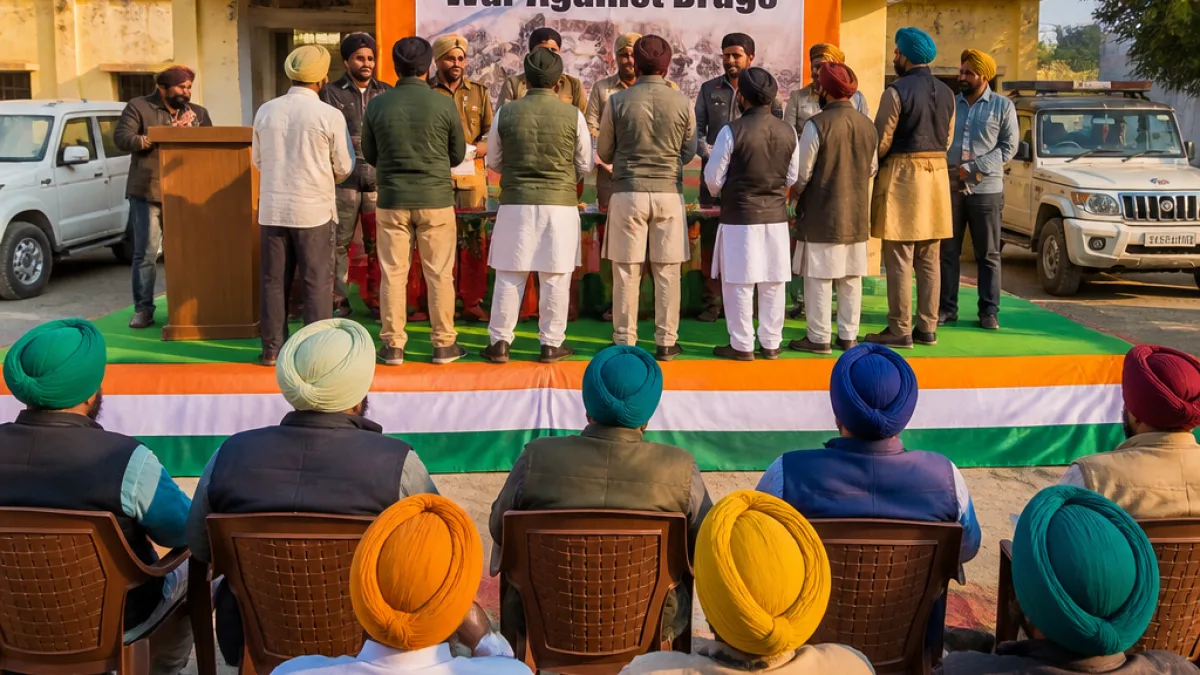
Programmes were organised at district, sub‑division and village levels, where deputy commissioners honoured assembly coordinators and vice assembly coordinators and sub‑divisional magistrates felicitated block coordinators. At the village level, sarpanches and community members held events in schools and gram panchayats to recognise VDC members who have been active against trafficking and substance abuse.
The state has instructed deputy commissioners in all 23 districts to identify eligible members of village and ward defence committees for formal recognition for their participation in advancing the anti‑drug campaign’s objectives.
Two‑week review exercise to follow
As part of a broader action and review plan issued by the office of the state nodal officer for the anti‑drug campaign, the government has scheduled a structured review process to incorporate community feedback into regular administrative and police reviews.
| Period | Activity |
|---|---|
| August 16–25 | Meetings of Village Defence Committees across villages to review complaints, assess police action, monitor pending cases and submit suggestions |
| August 26–29 | District‑level reviews to follow the village meetings; cabinet ministers to chair district meetings |
The review will require VDCs to examine complaints related to drug trafficking, evaluate action taken by police and administration on earlier complaints, track pending cases and submit fresh suggestions and feedback, the plan said.
Integration with public events and administration
Authorities have also decided that activities connected with the anti‑drug campaign will be given prominence during national day celebrations and other major government functions. The decision was taken at a state‑level meeting chaired by Chief Minister Bhagwant Singh Mann on August 2, according to the plan circulated by the nodal office.
- Who is being honoured: Members of Village Defence Committees and Ward Defence Committees, assembly and block coordinators.
- Scope of review: Village meetings followed by district‑level deliberations; cabinet ministers to chair district sessions later in August.
- Objective: To assess progress, incorporate grassroots feedback, monitor pending cases and strengthen local anti‑drug actions.
Officials framing the exercise have emphasised that the review is intended to feed community inputs into regular administrative and policing cycles, creating a structured channel through which village‑level concerns on drug trafficking and substance misuse can be escalated and tracked.
Local implications and administrative follow‑up
Village Defence Committees and Ward Defence Committees have been key intermediaries in the state’s anti‑drug drive, performing local surveillance, reporting suspicious activity and mobilising community awareness. The formal recognition and the mandated review are expected to strengthen accountability by requiring periodic reporting on complaints and pending cases.
From an administrative perspective, the involvement of deputy commissioners, sub‑divisional magistrates and, later, cabinet ministers aims to ensure that issues flagged at the village level are examined at higher tiers and that appropriate follow‑up is recorded.
While the state plan highlights institutional mechanisms, its success will depend on consistent police action, timely investigations, and follow‑through on cases identified during the reviews. Ensuring transparency in how complaints are handled and outcomes communicated to communities will be a key test for the initiative.
The government has signalled that the anti‑drug campaign will remain a visible part of civic life by incorporating it into public ceremonies and observances, a move that officials say will reinforce community participation and keep the issue on administrative agendas.
Implementation of the review and the outcomes from village and district meetings will be watched closely by social activists, panchayat leaders and police officials across the state as Punjab seeks to translate grassroots vigilance into measurable reductions in trafficking and substance abuse.