An Ontario Superior Court judge has convicted a commercial truck driver of dangerous driving causing death after a collision on Highway 17 killed a 64-year-old motorist near Terrace Bay in January 2023.
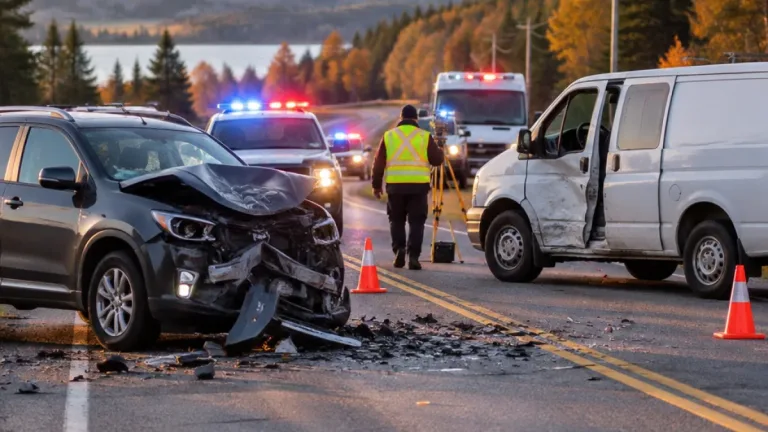
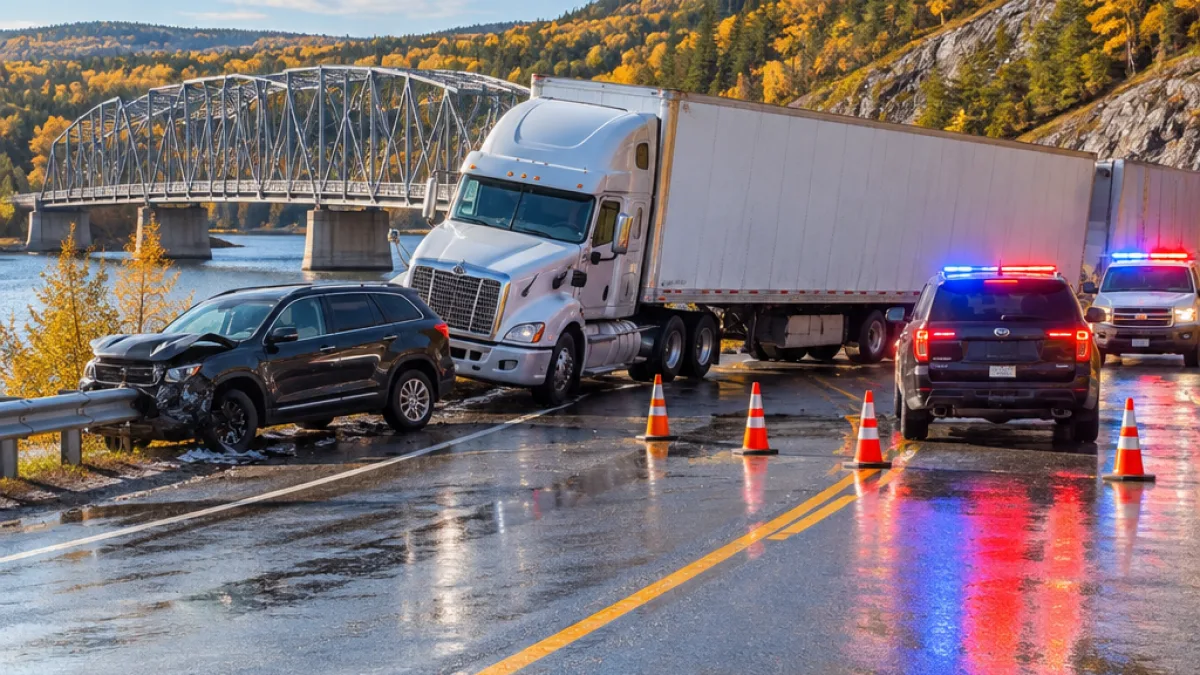
Gursharan Singh, who was 24 years old at the time of the crash, was driving a loaded Freightliner with a full trailer when the unit jackknifed and crossed the centre line. The truck struck a Ford Expedition travelling in the opposite direction near a bridge over the Steel River, roughly 27 kilometres east of Terrace Bay.
The decision was issued Nov. 9 by Justice F. Bruce Fitzpatrick of the Ontario Superior Court of Justice in Thunder Bay. The judge concluded that the Crown had proven beyond a reasonable doubt that Singh’s conduct posed a danger to the public.
“I find on all the evidence at this trial that the Crown has proved beyond a reasonable doubt that Mr. Singh was driving in a manner that was dangerous to the public.”
Crash unfolded on a northern highway
Arthur Meinen was driving the Expedition eastbound on Highway 17 on Jan. 28, 2023. His wife was in the passenger seat. Singh was travelling west in the tractor-trailer at the same time.
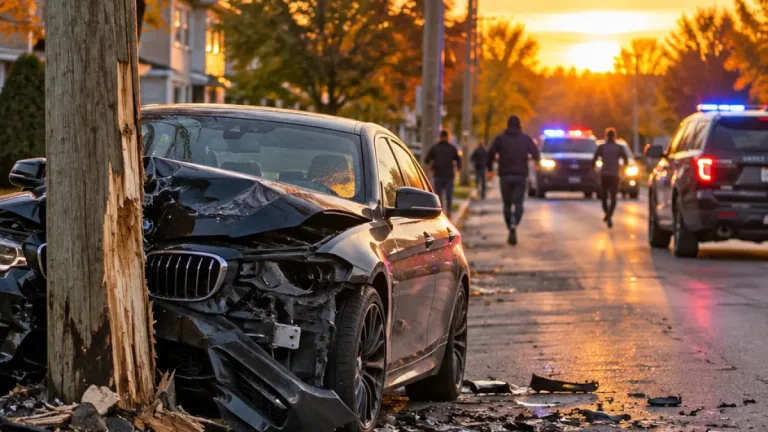
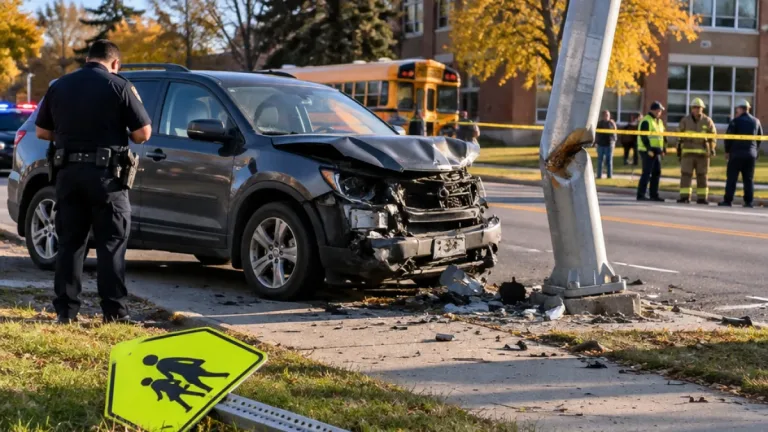
The crash occurred on a section of the Trans-Canada Highway near the Steel River bridge. The court heard that the morning was sunny, with a temperature of about –21 C. Although the pavement was wet, it was described as bare and salted. The two vehicles sustained severe damage in the impact.
Meinen suffered multiple injuries and died as a result. His wife sustained minor injuries, while Singh was not hurt. The decision noted that all of the Expedition’s airbags deployed, and photographs entered as trial exhibits showed the extent of the destruction.
Speed was central to the court’s findings
The case turned in part on the speed of the Freightliner as it moved along a downward stretch of highway. Const. Real Robert testified that the truck was travelling at about 110 km/h. That section of Highway 17 carried an 80 km/h speed advisory, according to the judgment.
Singh was estimated to have been travelling between 15 and 20 km/h over the speed limit on the morning of the collision. Two Ontario Provincial Police officers who attended the scene gave evidence that speed contributed to what happened.
| Case detail | Information before the court |
|---|---|
| Location | Highway 17 near the Steel River, east of Terrace Bay |
| Date of collision | Jan. 28, 2023 |
| Road conditions | Bare, wet and salted pavement |
| Truck speed cited at trial | Approximately 110 km/h |
| Victim | Arthur Meinen, 64 |
A decision focused on risk to other drivers
In his reasons, Fitzpatrick described Singh’s speed as a deliberate risk rather than an isolated number on a speedometer. The judgment said Singh appeared to rely on light traffic and the fact that he had managed to control the truck earlier in the trip. The court rejected the idea that those circumstances made the speed safe.
That finding is particularly significant on a highway corridor used by both passenger vehicles and heavy trucks. Highway 17 passes through long rural stretches in Northern Ontario, where a collision involving a tractor-trailer can leave little room for an approaching driver to avoid danger. The evidence in this case described a loaded commercial vehicle, a downhill section and a road surface that was wet even though it had been treated.
The court’s account also underscores the difference between clear visibility and safe driving conditions. The morning was sunny, but the pavement remained wet, and the temperature was well below freezing. The collision occurred on a road where the advisory speed was lower than the posted limit, a detail the judge considered in assessing the danger created by the truck’s speed.
What the conviction establishes
The finding of guilt establishes that Singh’s manner of driving met the legal threshold for dangerous driving causing death. It was not simply a conclusion that a crash had occurred or that someone had been injured. The judge found that the Crown had proved the required criminal conduct beyond a reasonable doubt.
The source decision does not provide a sentencing outcome. It also does not indicate whether the conviction was followed by an immediate penalty or set for a later hearing. The ruling available in the case concerns the trial conclusion and the judge’s assessment of the evidence surrounding the crash.
For communities along the North Shore and motorists travelling between Thunder Bay and western Northern Ontario, the case brings renewed attention to the risks created when speed, road conditions and heavy vehicle dynamics combine. The court’s reasons link those factors to the death of Meinen and to the injuries suffered by his wife.
The case leaves Arthur Meinen’s death at the centre of the proceedings. His wife survived, but the collision caused severe damage to both vehicles and ended the life of a man travelling on a major northern route. The conviction now records the court’s conclusion that the truck driver’s decisions on that January morning were dangerous to the public and causally connected to the fatal crash.