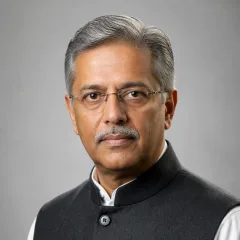

Former Chief Election Commissioner SY Quraishi on Sunday criticised the Election Commission of India’s Special Intensive Revision (SIR) of electoral rolls, saying the exercise has effectively removed about 14–15 crore people from rolls and urging the poll body to publish how many illegal immigrants it has identified.
Quraishi demands transparency on SIR outcome
Speaking to ANI in Bhubaneswar, Quraishi said he could not understand how many illegal immigrants the SIR had located — the stated purpose of the exercise — and called on the Election Commission (EC) to release that figure so the body could demonstrate its claimed success. He added that the SIR had, in his view, contributed substantially to reducing the population on electoral rolls.
"I would like to compliment the Election Commission for completing a very difficult mission of eliminating about 14-15 crore population of India through this exercise. I don't know how many illegal immigrants they have found, which was the main purpose of this exercise. It's a pity they have not disclosed this figure," he said.
Quraishi said the EC should make public the number of illegal immigrants detected so that the commission's achievement could be assessed against the original objective. He suggested the SIR had produced a large-scale exclusion of electors, a matter he characterised as problematic for democratic participation.
What the EC says about SIR
According to the Election Commission’s press note, the Special Intensive Revision is being conducted in several states to ensure electoral rolls are accurate, up-to-date and free of ineligible or duplicate entries while ensuring that no eligible elector is left out. The SIR was announced for nationwide application in October 2025 by Chief Election Commissioner Gyanesh Kumar, the EC said.
The press note lists reasons such as migration, voters registered at more than one place and names not deleted after death as driving the need for revision. The EC has framed SIR as a technical exercise to improve the quality of the rolls rather than a political measure.
Concerns over deletion and constitutional rights
This is not Quraishi’s first critique of the SIR process. He has previously described the exercise as "not well-intentioned" and warned that the deletion of crores of voters could amount to "tinkering with democracy." Quraishi emphasised that voting is a constitutional right under Article 326 and argued that registration is not a charity conferred by the Election Commission.
His remarks highlight two central tensions:
- The EC’s obligation to maintain accurate rolls and remove ineligible or duplicate entries.
- The risk that eligible electors may be excluded, potentially affecting voter access and political representation.
Election management experts and political parties have in the past disputed mass deletions from electoral rolls, noting that administrative processes — including migration verification and death registration — can lag and inadvertently remove valid voters. The EC’s challenge is to reconcile roll purity with inclusive registration.
| Aspect | Claim / Fact |
|---|---|
| Numbers reportedly removed | 14–15 crore (claimed by SY Quraishi) |
| SIR objective | Ensure accurate, up-to-date electoral rolls; detect ineligible/duplicate entries (EC press note) |
| SIR announced | Nationwide in October 2025 by CEC Gyanesh Kumar (EC press note) |
Quraishi’s call for the EC to disclose the count of illegal immigrants identified places emphasis on transparent outcome reporting. If the EC provides that figure, it would allow independent observers, parties and citizens to weigh the exercise’s stated goals against its operational impact.
The EC has so far framed SIR as a routine, technical revision intended to strengthen the electoral database. Quraishi and others contend that large-scale deletions without clear public accounting raise questions about the balance between administrative accuracy and electoral inclusion.
As SIR continues in multiple states, the debate over its scope and consequences is likely to persist. The EC may face renewed calls to publish detailed results and to explain safeguards used to prevent the exclusion of eligible electors.